What Happens During a Gonstead Examination? A Step-by-Step Look | Chiropractor - O'Fallon, MO
For many people, visiting a chiropractor can feel a little intimidating, especially if they've never been before.
Questions like:
"What happens during the first visit?"
"Will I get adjusted right away?"
"What makes Gonstead different from other chiropractors?"
are completely normal.
At Rise Family Chiropractic in O'Fallon, Missouri, we believe patients deserve to understand exactly what we're looking for and why.
One of the things that makes the Gonstead System unique is its commitment to thoroughness. Rather than relying on guesswork, Gonstead chiropractors use a detailed examination process designed to evaluate how the spine and nervous system are functioning.
The goal is not simply to identify where symptoms exist. The goal is to understand what may be contributing to those symptoms and how the body is adapting overall.
Let's walk through what a Gonstead examination typically involves.
Why the Examination Matters
Many people assume chiropractic care is primarily about adjustments. In reality, the examination is one of the most important parts of the process.
Think about it this way:
A builder wouldn't start construction without a blueprint.
A mechanic wouldn't begin repairs without first diagnosing the problem.
Healthcare should be no different.
Before making recommendations, we want to understand how your body is functioning. That information helps us create a care plan tailored specifically to you rather than applying a one-size-fits-all approach.
Step 1: Health History
Every Gonstead examination begins with a conversation. We want to understand your health story.
This includes discussing:
Current concerns
Previous injuries
Past surgeries
Lifestyle habits
Work demands
Exercise habits
Stress levels
Health goals
Many people are surprised by how much time we spend listening. That's because symptoms rarely tell the entire story. Understanding your history often provides important clues about how your body has adapted over time.
Step 2: Postural Analysis
The next step is evaluating posture. Posture is much more than standing up straight.
Your posture provides valuable information about how your body is balancing itself against gravity and adapting to daily stress.
During this assessment, we may observe:
Head Position
Shoulder Height
Hip Alignment
Weight Distribution
Movement Patterns
Even subtle imbalances can provide insight into how the spine and nervous system may be functioning. Today's lifestyles often create postural challenges due to prolonged sitting, screen time, and repetitive movement patterns.
Step 3: Instrumentation
One feature that often surprises new patients is the use of instrumentation. Gonstead chiropractors frequently use a specialized instrument called a Nervoscope.
The Nervoscope helps detect differences in heat along the spine.
Why does this matter?
Changes in temperature can provide information about neurological activity and may help identify areas that deserve closer evaluation. It provides another piece of information that helps create a more complete picture of spinal and nervous system function.
Step 4: Static Palpation
Next, we evaluate the spine by hand. This process is called static palpation.
During this portion of the examination, we assess for:
Tenderness
Swelling
Muscle Tension
Tissue Changes
These findings help us understand how the body may be responding to stress and whether certain areas require additional attention.
Step 5: Motion Palpation
Movement is one of the most important indicators of spinal function.
During motion palpation, we evaluate how individual spinal segments move.
Rather than simply looking at posture or symptoms, we assess whether specific joints are moving as they should. Restricted movement patterns may affect how efficiently the body adapts to physical stress.
This step helps us determine where spinal function may be compromised.
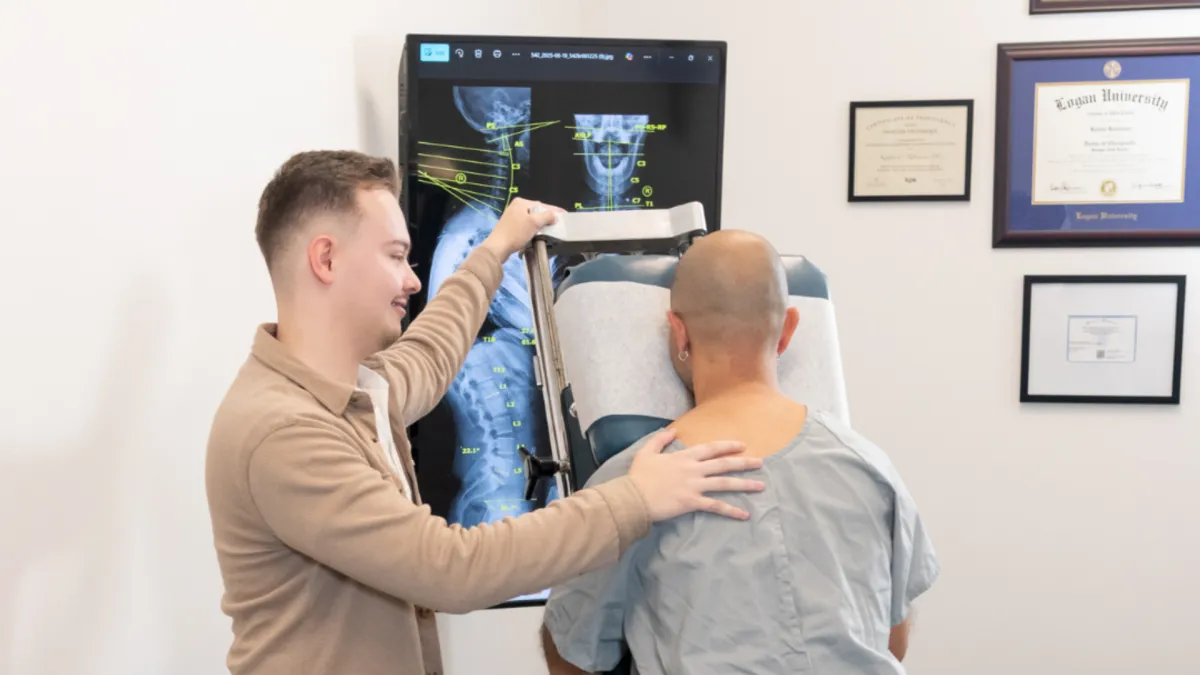
Step 6: X-Rays (When Appropriate)
One of the most recognized aspects of the Gonstead System is its use of detailed X-ray analysis when clinically appropriate.
Contrary to popular belief, X-rays are not taken simply because someone has back pain.
When indicated, X-rays help us evaluate:
Spinal Structure
Alignment
Disc Spaces
Degenerative Changes
Anatomical Variations
Most importantly, they help us deliver more specific care. Gonstead chiropractors use X-rays as part of a broader analytical process rather than relying on symptoms alone.
Why Specificity Matters
One of the defining characteristics of the Gonstead System is specificity.
Not every area of the spine requires an adjustment. Not every patient needs the same care. The purpose of the examination is to determine where care is needed and where it is not.
At Rise Family Chiropractic, we believe healthcare should be personalized. The body functions best when recommendations are based on objective findings rather than assumptions. This is one reason many families appreciate the Gonstead approach.
Looking Beyond Symptoms
One of the most important things we teach patients is that symptoms are not always the best measurement of health.
Many people seek care because of:
Headaches
Neck Pain
Back Pain
Fatigue
Tension
Sleep Challenges
But symptoms often represent the final stage of a process that has been developing for months or years.
The Gonstead examination helps us look deeper.
Rather than asking:
"Where does it hurt?"
we ask:
"How well is the body functioning?"
The Nervous System Connection
The spine exists to protect one of the most important systems in the body: the nervous system.
Your nervous system controls and coordinates:
Sleep
Digestion
Movement
Healing
Stress Responses
Hormone Communication
Energy Production
Because the nervous system influences every aspect of health, evaluating spinal function becomes about much more than pain relief.
It becomes about helping the body function at its highest potential.
For additional wellness education, we encourage families to explore resources available through the International Chiropractic Pediatric Association (ICPA) and the Pathways to Family Wellness Foundation.
What Happens After the Examination?
Once the examination is complete, we review the findings and discuss recommendations.
Our goal is to help you understand:
What we found
What it means
How it may be affecting function
Whether chiropractic care is appropriate
What next steps look like
We believe informed patients make better decisions about their health. That is why education remains a core part of everything we do.
A Different Approach to Health
The Gonstead examination is about more than identifying symptoms.
It is about understanding how the body functions as a whole.
Through detailed analysis, objective findings, and specific care, the Gonstead System helps patients gain a clearer understanding of their health and nervous system function.
At Rise Family Chiropractic in O'Fallon, MO, we are passionate about helping individuals and families move beyond symptom management and toward long-term wellness.
Schedule a Consultation
If you've been curious about chiropractic care or want to experience the Gonstead difference for yourself, schedule a consultation. We are committed to helping patients better understand their health through thorough examinations and neurologically focused care.


