Why Kids Need Boredom | Chiropractor - O'Fallon, MO
"I'm bored!"
If you're a parent, you've probably heard those two words more times than you can count. They usually come at the least convenient moment, and our first instinct is often to find something for our children to do.
We suggest an activity, turn on a show, offer a game, or start thinking about what we can add to the afternoon to keep everyone entertained.
But here's something I wish more parents knew: boredom isn't always a problem that needs to be solved.
In a world where children have access to endless entertainment and increasingly structured schedules, having nothing planned can actually create valuable opportunities for growth.
As a pediatric chiropractor, I spend a lot of time talking with families about healthy development. And while spinal health is an important part of the care we provide at Rise, children's overall well-being involves much more than what happens during an adjustment.
Sometimes, supporting a child's development means giving them a little more room to figure things out on their own.
Why We're So Quick to Fill Every Quiet Moment
Think about how different childhood can look today.
Between school, sports, homework, extracurricular activities, and screens, many children move through their days with very little unstructured time. Even when they have a free afternoon, entertainment is often only a button away.
None of those activities is inherently bad. Organized sports can teach valuable skills, educational programs can be wonderful, and technology certainly has its place. But when every quiet moment is immediately filled, children may have fewer opportunities to practice deciding what to do with their own time.
The American Academy of Pediatrics emphasizes the importance of play in healthy childhood development and specifically recognizes that some boredom can create opportunities for creativity.
That's an important reminder for parents who feel pressure to constantly provide something educational, productive, or entertaining.
Your child doesn't need every minute of the day planned for them.
Boredom Creates Space for Creativity
When children have an activity handed to them, they usually follow an existing set of instructions or expectations. But when they're left to come up with something themselves, they have to use their imagination in a different way.
A cardboard box becomes a spaceship. The couch cushions become a fort. A few sticks in the backyard turn into an elaborate game with rules that somehow change every five minutes.
What begins as "I have nothing to do" can become an opportunity to invent something entirely their own.
The American Psychological Association highlights how unstructured play provides opportunities for children to use their creativity and develop resilience through experiences they direct themselves.
This doesn't mean every bored child will suddenly become imaginative or that parents should never offer suggestions. Some children need more support getting started, especially when they're younger.
But giving them a little time to explore their own ideas can be valuable.
Children Need Opportunities to Make Their Own Decisions
One of the most interesting things about independent play is how much thinking happens behind the scenes.
When children create their own games, they have to make decisions. They figure out what they want to accomplish, change their plans when something doesn't work, and decide how to respond when an idea becomes frustrating.
These experiences involve skills associated with executive function, which includes planning, attention, working memory, and self-regulation.
Harvard University's Center on the Developing Child explains that play provides opportunities for children to practice and strengthen these important developing skills.
And that's one of the things I love about childhood. So much learning happens during moments that don't look particularly educational to adults.
Children don't always need us to give them the answer or organize the next activity. Sometimes they benefit from having the opportunity to work through a small challenge themselves.
Being Bored Doesn't Mean Being Unhappy
I think this distinction is especially important. As parents, we naturally want our children to be happy. When they complain about being bored, it can feel like something is wrong or that we're somehow falling short. But boredom is a normal human experience, and a temporary lack of entertainment isn't the same thing as emotional distress.
Children are still developing the ability to manage frustration and occupy themselves independently. That means the transition into unstructured time may not always be smooth.
It's okay to acknowledge their frustration without immediately taking responsibility for fixing it.
You might say, "I know you're bored. What do you think you could do?" Or offer a couple of simple starting points while leaving the final decision to them. The goal isn't to make children uncomfortable on purpose. It's to help them become more comfortable with the fact that not every moment needs immediate stimulation.
Of course, boredom that accompanies persistent sadness, withdrawal, or significant behavioral changes deserves a different conversation and appropriate support.
What Does This Have to Do With the Nervous System?
At Rise Family Chiropractic, we talk about the nervous system frequently because it plays a central role in how the body functions. But the nervous system isn't only involved in physical movement. The brain is also responsible for processes involved in attention, learning, emotional regulation, and decision-making. Those abilities develop through a combination of maturation, relationships, experiences, and opportunities to practice.
When children engage in self-directed play, they have opportunities to use those developing abilities in everyday situations. The Harvard Center on the Developing Child describes executive function and self-regulation as skills that develop over time and are strengthened through supportive experiences.
This is also why I believe it's important to look at children's health from a broader perspective.
We're passionate about regular spinal care and supporting families as their children grow. Our Gonstead approach emphasizes careful evaluation and specific, age-appropriate chiropractic care.
But chiropractic adjustments aren't a replacement for play, and we wouldn't claim that an adjustment teaches creativity or treats behavioral difficulties. Those developmental skills are influenced by many factors.
Our philosophy is that caring for growing bodies belongs alongside the everyday habits and experiences that help children thrive.
If you'd like to learn more about our approach, I explain it further in What Makes Gonstead Different?.
Sometimes Less Structure Is Exactly What Kids Need
If your child's schedule feels packed, you don't necessarily need to make a dramatic change.
Start by leaving a little room in the day without a specific plan. Maybe that means allowing some free time after school before the evening routine begins. Maybe it's an afternoon outside without organized games, or a weekend morning when nobody has to rush out the door. You can still provide a safe environment, age-appropriate materials, and support when needed. The difference is allowing your child to take more ownership of what happens next.
In our recent article, Why Kids Need More Movement Than Just Sports Practice, we discussed how children benefit from movement that isn't always directed by a coach or organized activity. The same principle applies here, but it goes beyond physical activity.
Children also benefit from having opportunities to follow their curiosity without an adult deciding what the outcome should be.
You Don't Have to Entertain Your Children Every Minute
If there's one thing I hope parents take away from this, it's that you don't need to feel guilty when your child has a little downtime. You don't need to fill every afternoon with activities or turn every free moment into a learning opportunity.
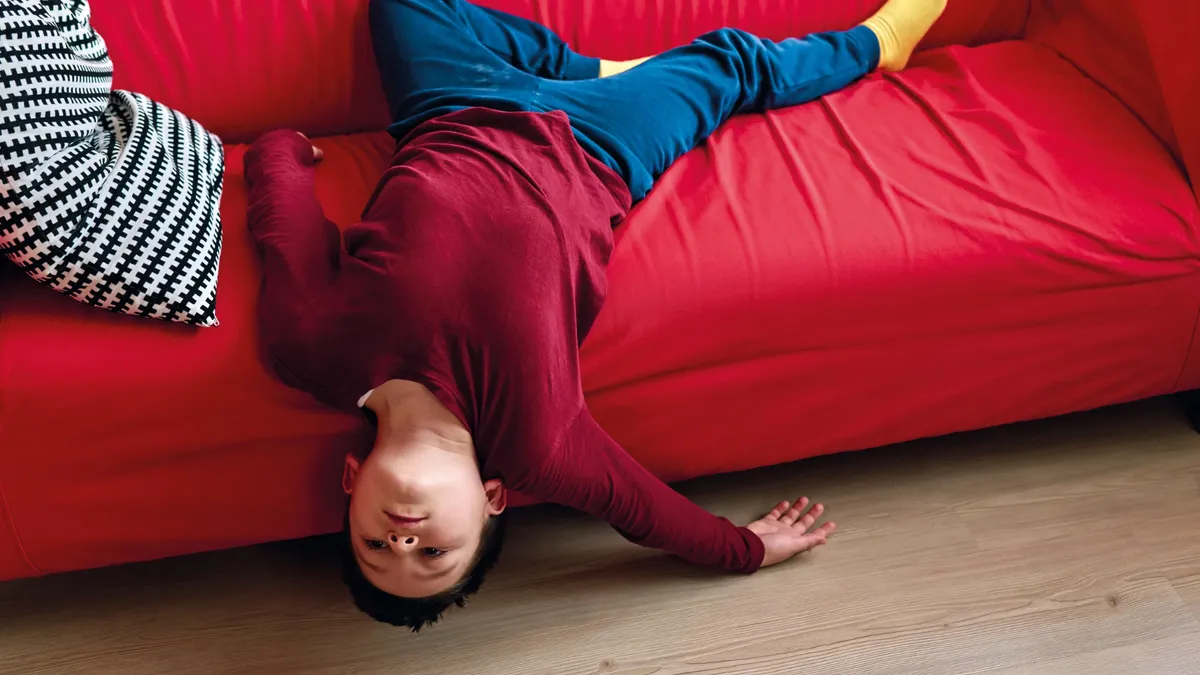
Childhood already offers plenty of opportunities to learn through everyday experiences. Sometimes those experiences begin with a child sitting on the couch announcing that there's absolutely nothing to do.
And sometimes, if we give them a little time, what happens next is pretty wonderful.
The next time your child tells you they're bored, you might not need to fix it. You might just need to give them the chance to surprise you.
At Rise Family Chiropractic in O'Fallon, Missouri, we love caring for growing families and helping parents make spinal health a consistent part of their family's wellness routine. Dr. Kallie and Dr. Kaiden provide individualized pediatric chiropractic care using the Gonstead approach, with attention to each child's age and examination findings.
SCHEDULE A VISIT


